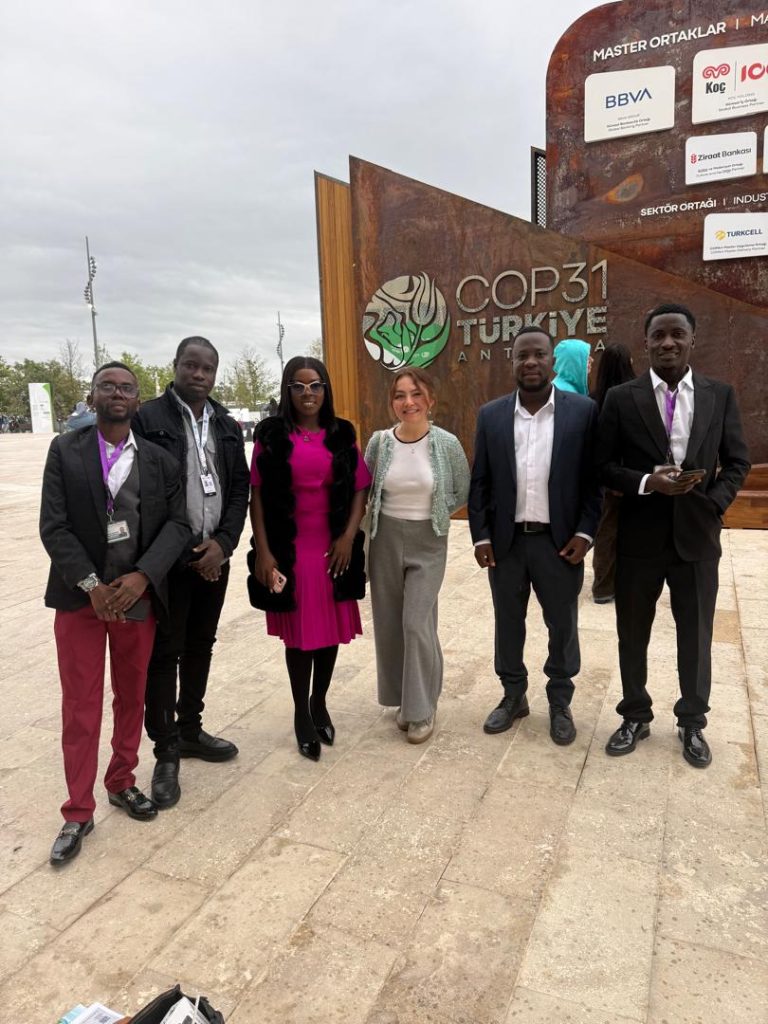
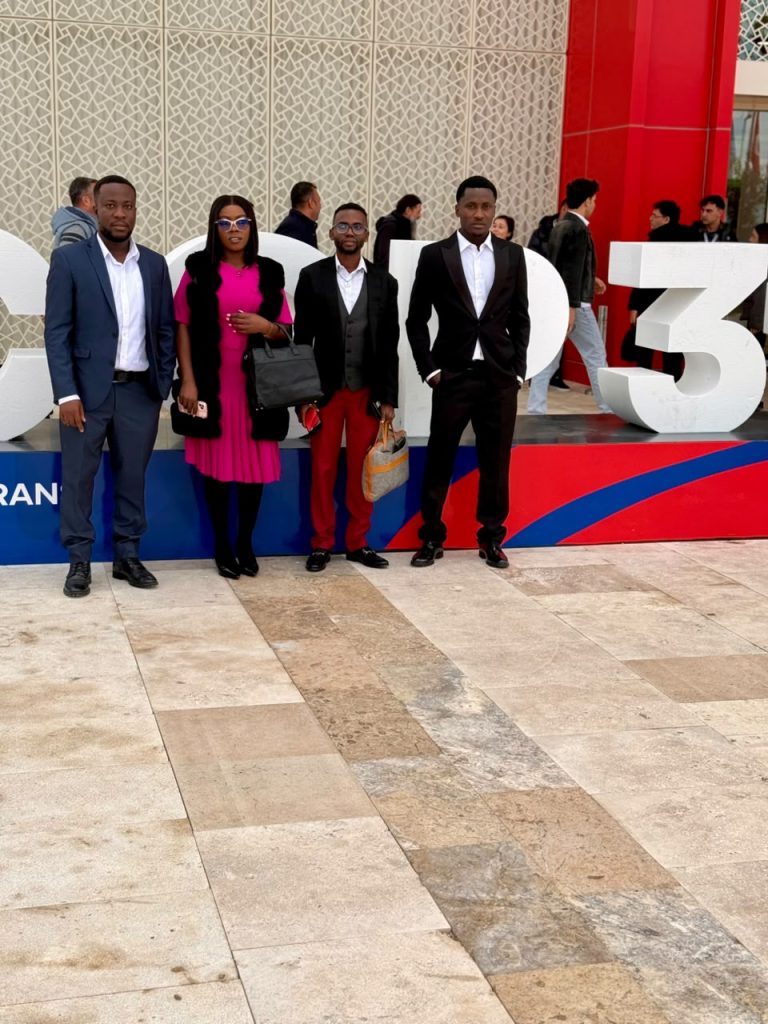
SEDARVP Ghana is proud to announce its delegation’s participation in the 31st Conference of the Parties (COP31) to the United Nations Framework Convention on Climate Change, taking place in Antalya, Türkiye, from 9–20 November 2026.
Our presence at COP31 is not symbolic. It is the culmination of years of work at the intersection of youth empowerment, community resilience, and environmental stewardship in Northern Ghana — and it is a statement of what we believe the global climate conversation must become.
COP31 arrives at a critical moment. The conference is focused on three urgent priorities: implementing emissions reduction targets, delivering climate finance to developing countries, and strengthening adaptation and resilience. For communities in Ghana’s Northern Region — where SEDARVP Ghana operates — these are not abstract policy categories. They are the daily realities of farmers facing unpredictable rains, young people confronting climate-driven migration pressures, and families navigating resource scarcity.
As an organisation holding UN ECOSOC Consultative Status, UNFCCC Observer Status, UNCCD Observer Status, and Green Climate Fund Observer Status, SEDARVP Ghana occupies a rare space: we are accredited to engage at the highest levels of global governance, yet we remain rooted in the grassroots communities where climate impacts are most acutely felt.
This dual position is our strength. We bring to COP31 the voices, evidence, and lived experiences of young people and communities in Northern Ghana who are too often absent from global decision-making tables.
What We Stand For
1. Youth Are Not Just Beneficiaries — They Are Climate Leaders.
SEDARVP Ghana was founded in 2008 with a vision of a society where everyone, regardless of background, lives a dignified and fulfilling life in a safe and healthy environment. Our work has always recognised that young people are not passive recipients of development — they are innovators, researchers, and agents of change.
At COP31, we stand for the meaningful inclusion of youth in climate governance. The COP31 Presidency itself has acknowledged that young people want “more than a seat at the table” — they want to be trusted and resourced as partners in delivery. We share that conviction. Our programmes, including the Youth Eco-Resilience (Y.E.R.) initiative, demonstrate that when young people are equipped with knowledge, skills, and platforms, they become powerful advocates for climate action in their own communities and beyond.
2. Climate Finance Must Reach the Frontlines.
COP31’s focus on climate finance is welcome, but we know from experience that finance often does not reach those who need it most. The COP31 President of Negotiations has noted that “the countries that need climate finance the most are getting it the least”. We see this in Northern Ghana, where adaptation projects remain underfunded and communities are left to cope with increasingly severe climate shocks without adequate support.
As a Green Climate Fund Observer, SEDARVP Ghana advocates for simplified, accessible, and community-driven finance mechanisms. We believe that local organisations — not just national governments and large institutions — must be able to access resources directly, because they understand the contexts and have the trust of the communities they serve.
3. Adaptation and Resilience Are Not Optional.
Ghana has committed to ambitious climate action through its Nationally Determined Contributions (NDCs), including unconditional and conditional emission reduction targets and adaptation measures across agriculture, water, health, and disaster risk management. But commitments require implementation. In the Northern Region, where SEDARVP Ghana works, communities need early warning systems, climate-smart agricultural support, and resilient infrastructure — not just in policy documents, but in practice.
Our participation at COP31 is an opportunity to connect local realities with national commitments and global frameworks. We will use our observer status to ensure that adaptation and resilience are treated not as secondary concerns, but as the foundation of a just climate transition.
4. Environmental Protection and Community Development Are Inseparable.
SEDARVP Ghana’s mandate spans environmental protection, education, health, food security, and youth development. We do not treat these as separate silos. In the communities we serve, climate change is a health issue, an education issue, an economic issue, and a gender issue — all at once.We bring this integrated perspective to COP31. Our message is that climate action cannot succeed if it is pursued in isolation from the social and economic realities of the communities most affected. A just transition requires investment in people — their education, their livelihoods, and their capacity to participate in decisions that shape their futures.
What We Bring to the Table
SEDARVP Ghana arrives at COP31 with:
- Direct experience implementing community-based climate resilience and youth engagement programmes in Northern Ghana
- Accreditation and standing to engage with UNFCCC processes, the Green Climate Fund, and ECOSOC, enabling us to bridge grassroots realities and global policy
- A network of young leaders who are already developing local solutions to climate challenges and who are ready to contribute to international dialogue
- Commitment to partnership — we believe in collaboration, not competition, and we seek to build alliances with organisations and institutions that share our vision
Looking Ahead
Our delegation’s participation in COP31 is not an end in itself. It is a platform for action.
We will use the insights, relationships, and momentum from Antalya to strengthen our work in Ghana — translating global conversations into local impact, and ensuring that the voices of Northern Ghana’s youth and communities are heard long after the conference closes.
We invite partners, funders, and fellow civil society organisations to connect with our delegation at COP31. Together, we can ensure that the climate transition is not only ambitious, but just, inclusive, and grounded in the realities of those who have the least and stand to lose the most.
SEDARVP Ghana — Building a sustainable society, one community at a time.